Your Exploding Headcount and Your Talent Strategy
Despite your product roadmap, revenue chart, and inbox bursting at the seams with client requests, growth can feel unsustainable, especially if your workforce is still too small. Growth stalls for many businesses due to insufficient talent strategy. That successful product is rendered obsolete and your market becomes saturated.
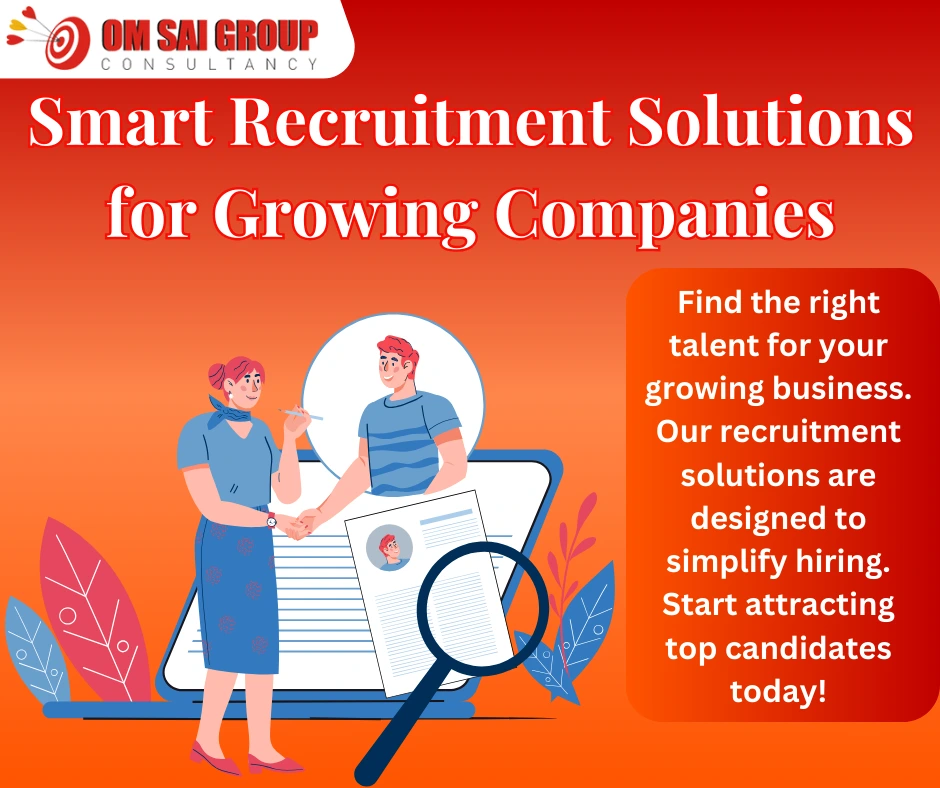
If you’re in this growth predicament, you’re not alone. Growing a workforce is more complicated than Recruitment solutions for growing companies have been some of the most sought after services for businesses.
Why Talent Acquisition Systems Break Under Rapid Growth
The Bottleneck Nobody Talks About
Most founders plan for cash flow bottlenecks. Talent bottlenecks don’t get planned for, but they are the reason a company stops growing. Manual systems and talent acquisition processes that worked for a couple of hires each quarter will not hold up for twenty, fifty, or even hundreds of hires over the same time period.
Growing company recruitment solutions are not a luxury. They are talent acquisition infrastructure. You wouldn’t run your business without supply chain infrastructure. Likewise, you shouldn’t try to scale your workforce without a talent framework.
The Domino Effect of a Broken Pipeline
A messy and unorganized talent pipeline will not just hurt your ability to fill new roles, but will lead to a chain reaction of overworked employees, missed deadlines and will ruin your employer brand all while attracting competing companies who will recruit your best candidates away. We live in an age of candor and transparency where reputation burns quickly and a bad candidate experience can effectively lead to no candidates.
Building A Scalable Talent Engine: What Actually Works
Adopting Applicant Tracking Systems With AI
True Applicant Tracking Systems have moved beyond simple resume storage. Most, if not all, use predictive analytics, natural language processor and automated shortlisting technology to hire 4x faster. For companies that need to scale, these systems are a necessity, not a luxury. Consider platforms with ease of integration, customizable workflows and instant collaboration between recruiters and hiring managers.
Recruitment Process Outsourcing (RPO)
RPO vendors assume all responsibilities of recruiting and talent acquisition from candidate sourcing to negotiations. Scaling companies that lack the ability to build their talent acquisition teams at the rate at which a business is growing will appreciate the RPO model. This model offers recruitment experts and infrastructure at a cost and speed that is unmatched to the traditional in-house model, all while outsourcing.
Build Your Employer Branding In Advance
Employer branding helps with talent recruitment, but many companies wait until they really need talent before they work on their employer brand. Job candidates have now turned into brand researchers, and companies can no longer ignore an employer branding strategy if they want to attract top talent. Proactive companies with magnetic employer brands often see reduced time to fill and increased offer acceptance. Authentic storytelling, culture content and videos, and employee testimonials have better results than ever before career pages.
Nurture Talent Pools and Passive Candidates
The best talent is often not applying to jobs, as they are happily employed. However, they are still open to the right opportunity. More sophisticated talent acquisition strategies include talent pool nurturing, or long-term relationship building with prospective candidates. This shifts the talent acquisition strategy from reactive to proactive, resulting in a talent pipeline that is always prepared to fill a job.
Evaluate Skills Over Name Recognition
A candidate’s institutional pedigree is often rubber stamped on the candidate’s resume. This pedigree plays a large role in whether or not a candidate’s resume is read. Alternative methods of assessments including situational judgment tests, coding assessments, and work sample reviews are a better predictor of on-the-job performance and have proven to improve talent selection at more diverse companies.
Be Careful After Making the Investment, Simplify Your Onboarding
Recruitment doesn’t finish once you sign the offer letter. A complicated onboarding process can result in disengagement and eventual departure of sourced candidates in a matter of weeks. Maintaining a structured onboarding process with a mentorship pair, goal tracking check-ins, and clear goal outlining, drastically improves retention. Talent acquisition is a costly process, it is especially costly to lose talent in the first three months.
Prioritize Your Workforce Plan
Waiting to identify talent shortages with a sudden influx of hiring requests is a sure-fire way to create burnout and a disruptions in focus. Purposeful companies create talent shortage prediction models in the upcoming months based on anticipated changes to the bottom line from changes to company revenue, product launches, and market growth. This model shifts talent acquisition from a fire drill to a premeditated step of the company’s overall business strategy.
Visit Our Social Platform: LinkedIn
Find Us Through Our Social Platform LinkedIn
The Main Takeaway: Momentum Needs Structure
Grow your company quickly, but without a systematic recruitment process, it will all come crashing down. The infrastructure of Recruitment solutions for growing companies at a rapid pace is not something that should be nice to have. This infrastructure is something that is needed for a company to continue growing. The companies that succeed during rapid growth are the companies that understood that people are the core drivers for the growth of the company.
Regardless of whether you choose to implement an AI-based applicant tracking system, partner with an RPO service, step up your employer brand, or innovate your onboarding experience, the principle is the same. Talent acquisition should grow at the same pace as enterprise growth. Companies that consider recruitment as an extension of their businessgrow and those that don’t, stagnate.
Now is the time to evaluate your current recruitment strategy. Are you using recruitment management systems that contain multiple spreadsheets and haphazard recruitment strategies? Or, have you developed a powerful recruitment management system that can grow with your business? The organizations who are winning the talent war look at recruitment not as an afterthought,
but as a key business differentiator.
- Scalable staffing solutions for startups
- Talent acquisition strategy 2026
- Employer branding tips for small business
- Workforce planning tools
- Candidate experience best practices
- AI recruitment software comparison
- Talent pipeline management
Frequently Asked Questions
What are recruitment solutions for growing companies?
These are structured systems, tools, and strategies — such as applicant tracking software, recruitment process outsourcing, and employer branding initiatives — designed to help expanding businesses source, evaluate, and onboard talent efficiently as headcount needs increase.
How do small businesses afford enterprise-level talent acquisition tools?
Many platforms now offer tiered, subscription-based pricing specifically designed for smaller teams, allowing businesses to access sophisticated features without the enterprise price tag. Recruitment process outsourcing is another cost-effective alternative to building a large internal team.
What’s the difference between an ATS and an RPO?
An applicant tracking system (ATS) is software that manages and organizes candidate applications internally. Recruitment process outsourcing (RPO) is a service where an external partner manages part or all of the talent-acquisition process on your behalf.
How long does it typically take to fill a role during rapid growth?
Timeframes vary by industry and seniority, but companies using optimized pipelines and predictive workforce planning typically reduce time-to-fill by 30-50% compared to those relying on manual, reactive processes.
Why is employer branding important for scaling companies?
A strong employer brand builds trust and credibility before a candidate even applies, resulting in higher-quality applicants, faster decision-making, and improved offer-acceptance rates — all critical when speed matters most.
Can skills-based assessments really improve diversity?
Yes. By evaluating candidates on demonstrated ability rather than institutional pedigree or resume keywords, companies reduce unconscious bias and open doors to a broader, more diverse talent pool.