Industrial Talent Acquisition vs. Traditional Recruitment
You’ve lost 2 operators at your plant this month. You’ve quickly replaced the positions, only to have 2 more operator positions vacated 3 months later. Effective industrial talent acquisition focuses on creating a system to forecast and build a talent pool, while giving candidates realistic previews of the job. You can roll out this approach using the 5 steps below, supported by a practical metric framework.
In the short term, you’re best suited to enlist the services of a talent acquisition firm to source and assess the skills needed to operate your plant. With foresight and planning, 2027 is bound to be a better year for your plant’s operations.
What does Industrial Talent Acquisition mean anyway, and how does it differ from Recruitment?
Recruitment involves replacing present employees to fill vacant positions. Talent acquisition involves anticipating and preparing for future vacancies to ensure potential employees for those positions are available when needed.
- Timing: Recruitment occurs after a position has become vacant; talent acquisition occurs before a position becomes vacant.
- Focus: Recruitment focuses on filling one vacant position; talent acquisition focuses on establishing a process and framework to fill multiple positions.
- Time estimate: Weeks for recruitment; months or years for talent acquisition.
- Outcome: An employee is hired for a single role through recruitment; a ready pool of candidates exists for multiple positions through talent acquisition.
Why do employees leave so quickly following their employment?
Without a structured industrial talent acquisition process, employees often leave shortly after joining for several reasons, including:
- Expectations not met pertaining to shift length and duration, location, or compensation
- Inability of the employer to assess the employee’s ability to perform the job
- Insufficient support and training
- Insufficient or lack of safety training
What is the effect on the plant of employees leaving quickly?
When early exits happen repeatedly, industrial talent acquisition becomes essential to protect output and control costs:
- Increased cost due to having to train an employee twice.
- Decreased output and increased downtime of the machinery
- Increased overtime for existing employees
- For each new employee, there is increased risk to the safety of other employees
Example: A plant in Ludhiana, to enable expansion, is looking to hire 12 CNC operators and 6 quality inspectors. Retention of these employees has been poor.
Step 1: Define the Role
To recruit the right people for the right positions at operational levels of a plant, including:
- Load and handle materials
- Operate machinery
- Inspect quality of products
- Maintain and repair plant equipment
- Oversee and manage various activities within the plant
Identify the type and volume of equipment used, the shifts worked, and the risks involved.
Step 2: Build a Candidate Pool
A strong industrial talent acquisition strategy relies on maintaining a candidate pool—a list of individuals previously assessed for potential future vacancies.
Once you have identified potential candidates, make some notes on each individual to assist in determining their fitness for the role, including what salary they would expect, how long notice they would need to give, and when they would be available to start.
Step 3: Assess Fitness
Prior to shortlisting for a vacancy, assess each potential candidate for other skills relevant to the role using examples like a simple trade test to inspect a machine drawing to assess their ability to set up the machine for the task. Alternatively, you could use hypothetical questions to assess their knowledge of safety practices to be observed prior to interacting with a machine.
Step 4: Truth in Recruitment
As part of industrial talent acquisition, it is in the best interest of the organization to provide candidates a realistic preview of the job before employment.
Step 5: Follow Up After Joining
Check in on the first, seventh, thirtieth, and ninetieth day after the new employee has joined.
- What was different from their expectation?
- Address any concerns quickly.
- Observe who leaves early and why.
What should be tracked?
- Time to fill: How long on average, does it take for a seat to be vacated in your office?
- Source of Hire: Which source is most effective in bringing the longest-term employees to the company?
- 90 Day Voluntary Turnover Rate: How many employees leave within the first 90 days?
- Offer to Hire Ratio: How many times do you have to interview a candidate before making a job offer?
Of these metrics, which ones do you think it would be most useful to track on a quarterly basis?
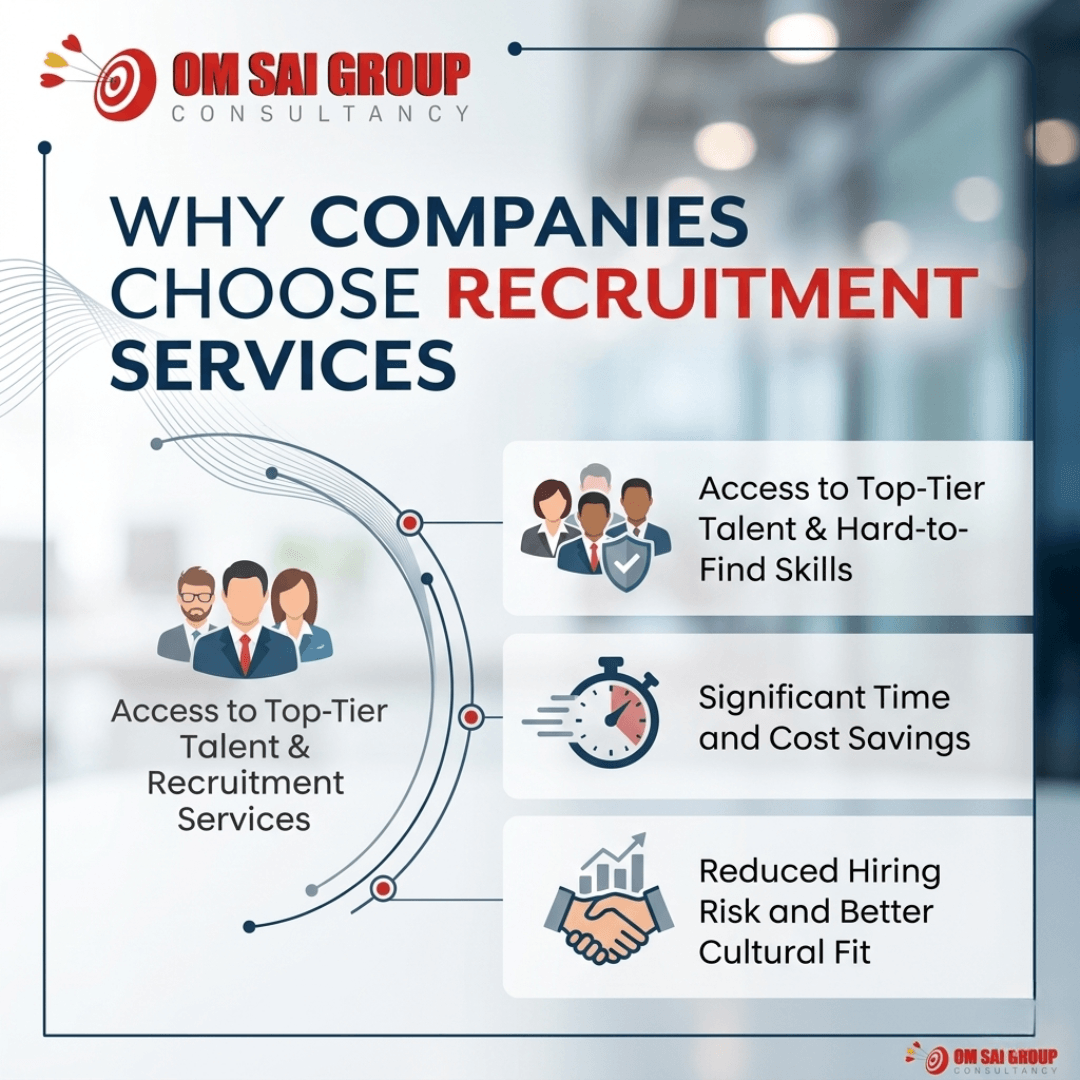
What is the advantage of using a recruitment agency?
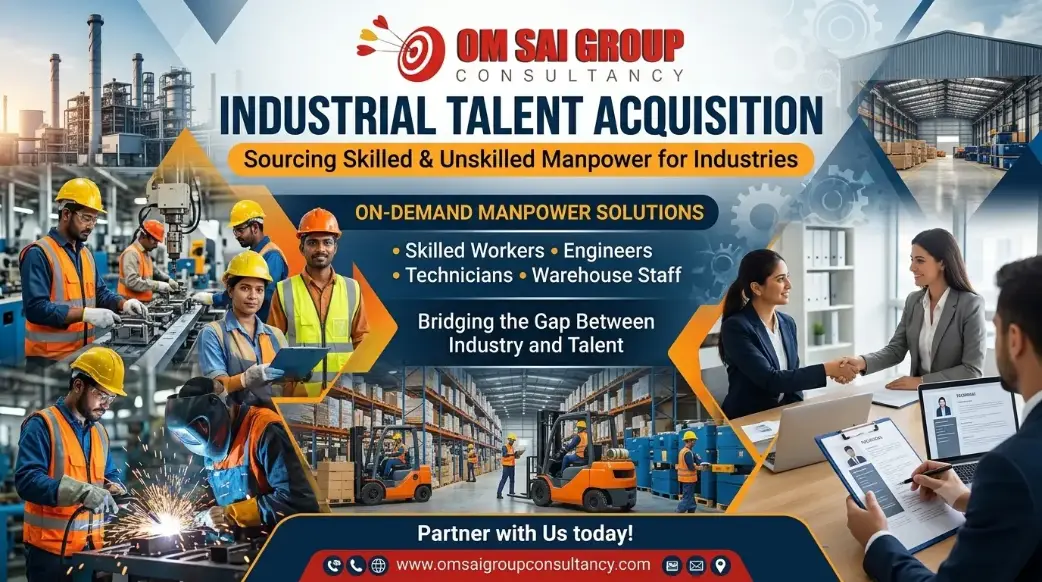
Outsourcing industrial talent acquisition to a specialized consultancy takes one more task off their plate. Using a recruitment agency to assist with the selection process takes one more task off their plate. In addition, an HR consultancy would be able to advise on appropriate salary levels to give to prospective employees.
Using a recruitment consultancy has these benefits:
- You don’t have to spend time making phone calls or sifting through resumes.
- Profiles are screened in advance, increasing the likelihood of a more relevant candidate.
- They expand your pool of potential candidates beyond those currently job hunting.
- You have more time to focus on other activities as you only need to conduct interviews to determine the final candidate.
How do I identify appropriate candidates for an industrial role?
Potential candidates are individuals with the experience, skills, and personality to perform the role effectively. Prior to your briefing, your consultancy should have done the following:
- Conducted searches on numerous job boards and ITI networks.
- Conducted ‘Step 3’ safety and trade tests.
- Provided ‘Step 4’ job sample to prospective candidates.
- ‘Pre-screened’ candidates and provided just the short list to you.
- Remained in contact with short-listed candidates until they started in the role.
Is it possible for a recruitment consultancy to handle branched or bulk hiring?
Yes. To fill the 12 operator positions available at the Ludhiana plant, the consultancy should:
- Simultaneously search on various job boards.
- Conduct batch screenings of candidates.
- Conduct batched interviews, either face-to-face or online.
- Maintain and track a list of all applicants for each position.
- Provide you with a ‘batch-ready’ list of candidates to interview.
Things to Avoid
When executing industrial talent acquisition on a plant floor, avoid these common pitfalls:
- Waiting to hire until a position becomes vacant
- Not taking the trade test
- Failing to disclose night shifts or locational distance of the role
- Not paying attention to the first 90 days of a new employee’s tenure
- Not keeping a record of the reason each employee has given for leaving
Industrial Talent Acquisition
Day 1: Identify roles on an organization chart
Day 2: Identify your top 3 sourcing channels and previous company exits
Day 3: Create a trade test and job preview for one role of your choice
Day 4: Identify and agree to terms with 2 consulting firms of your choice
Day 5-7: Use this week-one checklist to launch industrial talent acquisition at your plant:
In the meantime:
- Create a role-specific organization chart
- Create and implement a trade test to assess candidates’ qualifications for the role
- Write job preview statements
- Schedule 30- and 90-day follow-ups with recent hires
FAQ
What is industrial talent acquisition?
It is the proactive process of identifying and evaluating individuals for roles in plants and factories, and retaining them for potential future vacancies.
What is the difference between talent acquisition and recruitment?
Talent acquisition is carrying out the process to identify individuals for roles prior to them becoming vacant. Recruitment is carrying out the process to fill an existing vacancy.
What would reduce ‘early leavers’ in a plant?
Prior to offering an individual the role, take them to visit the site to explain the shift operation. Follow up with them on day 7 to see how they’re finding the role, again on day 30 and finally on day 90.
How long does it take to recruit more skilled personnel?
This depends on the exact requirements of the role, including experience level and remuneration. Normally, entry-level positions take less time to fill.
How much can we expect to pay an industrial recruitment agency?
Again, this depends on various factors, including the level of seniority of the person being recruited and the overall volume of recruitment. Before you engage the agency’s services, request that they provide a fee estimate in writing.
In the meantime, plants that do not recruit on a regular basis are likely to continue employing the same poor performers. To improve performance across the plant, take these 5 steps: define the role, create a talent pool, assess individuals against the definition, tell the truth about the job, and finally follow up with candidates once they have joined. Regular talent acquisition and recruitment processes will help reduce voluntary turnover of your employees and improve overall performance of the workforce.
When you’re ready, Om Sai Group Consultancy can assist you in creating your first talent recruitment pipeline.
Conclusion
Plants that only recruit reactively often face recurring skill gaps, higher overtime, and repeated early exits. By following these five steps—defining the role, building a candidate pool, assessing fitness against role requirements, giving a realistic job preview, and following up after joining—plant leaders can reduce voluntary turnover and strengthen workforce performance. When you are ready, Om Sai Group Consultancy can help you build a reliable industrial talent acquisition pipeline tailored to your operations.