We Are Hiring – Professional Recruitment Services
At Om Sai Group Consultancy, we provide fast and reliable Hiring and Talent Acquisition services for companies across India. Our experienced HR Managers help employers find skilled and verified candidates quickly and efficiently.
Why Choose Us?
- ✅ No Advance Fee
- ✅ No upfront payment. Payment only after joining
- ✅ Fast resumes
- ✅ Quality candidates
- ✅ Low follow-up
- ✅ Guaranteed joining
We specialize in recruitment for IT, Sales, HR, Healthcare, Manufacturing, Finance, BPO, and many other industries.
Contact Us
📞 +91 7291-024-327, +91 7503-979-405
✉️ hr@omsaigroupconsultancy.com
🌐 Om Sai Group Consultancy
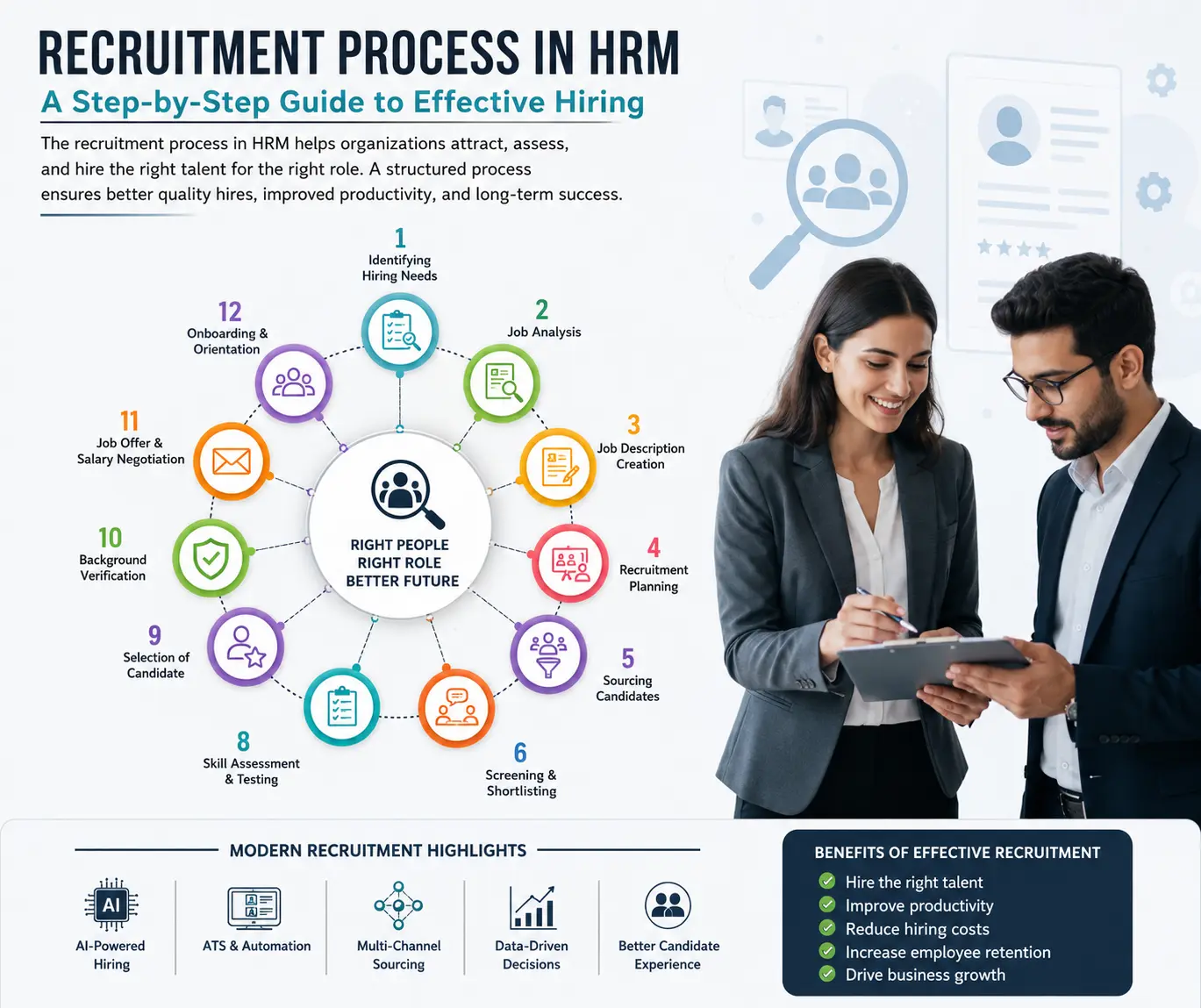
The recruitment process in Human Resource Management (HRM) is one of the most important functions of any organization. It helps companies identify, attract, evaluate, and hire the right talent for business growth. A strong recruitment process improves employee productivity, reduces hiring costs, strengthens company culture, and increases long-term retention. Recruitment Process in hrm
Modern recruitment is no longer limited to posting job advertisements and conducting interviews. Today, businesses use structured hiring strategies, AI-based screening tools, employer branding, social media recruitment, applicant tracking systems (ATS), and data-driven hiring methods to recruit the best candidates.
According to industry hiring guides and HR platforms, recruitment typically includes workforce planning, job analysis, sourcing, screening, interviewing, selection, onboarding, and retention-focused hiring strategies.
What is Recruitment in HRM?
Recruitment in HRM refers to the systematic process of finding, attracting, selecting, and hiring qualified candidates for vacant job positions within an organization.recruitment process in HRM
The main objective of recruitment is to place the right person in the right role at the right time.
Recruitment helps organizations:
- Build a skilled workforce
- Improve operational efficiency
- Reduce employee turnover
- Support business expansion
- Enhance organizational productivity
- Maintain competitive advantage
Human Resource Management departments manage recruitment activities through structured hiring procedures and recruitment planning systems.
Importance of Recruitment Process in HRM
An effective recruitment process is critical because employees directly influence business performance and organizational success.
Key Benefits of Recruitment in HRM
1. Helps Hire Qualified Candidates
A proper recruitment process identifies candidates with the required skills, qualifications, and experience.
2. Reduces Hiring Costs
Structured recruitment minimizes wrong hiring decisions and reduces employee replacement costs.
3. Improves Employee Retention
Hiring candidates who fit company culture improves long-term retention.
4. Enhances Productivity
Talented employees improve operational performance and team efficiency.
5. Supports Business Growth
Organizations can scale faster with strong recruitment systems.recruitment process in HRM
6. Strengthens Employer Branding
Positive hiring experiences improve the company’s reputation in the job market.
7. Improves Diversity and Inclusion
Modern HR recruitment encourages equal employment opportunities and inclusive hiring practices.
Objectives of Recruitment Process
The major objectives of recruitment are:
- Attract skilled candidates
- Create a talent pipeline
- Fill vacancies quickly
- Reduce recruitment costs
- Ensure cultural fit
- Improve workforce quality
- Maintain legal compliance
- Support organizational goals
Types of Recruitment in HRM
Internal Recruitment
Internal recruitment means filling vacancies using existing employees within the organization.
Methods of Internal Recruitment
- Promotions
- Transfers
- Internal job postings
- Employee referrals
- Rehiring former employees
Advantages
- Faster hiring
- Lower cost
- Improves employee motivation
- Better cultural fit
Disadvantages
- Limited talent pool
- Internal competition
- Reduced innovation
External Recruitment
External recruitment means hiring candidates from outside the organization.recruitment process in HRM
Methods of External Recruitment
- Job portals
- Recruitment agencies
- Campus recruitment
- LinkedIn hiring
- Social media recruitment
- Walk-in interviews
- Job fairs
- Company career pages
Advantages
- Fresh talent
- New ideas
- Wider candidate pool
- Better skill diversity
Disadvantages
- Higher cost
- Longer hiring process
- Training requirements
Complete Recruitment Process in HRM
1. Identifying Hiring Needs
The recruitment process begins when a department identifies a vacancy or workforce requirement.
Reasons may include:
- Business expansion
- Employee resignation
- Retirement
- New projects
- Increased workload
HR managers coordinate with department heads to understand staffing requirements.
2. Job Analysis
Job analysis helps HR understand the responsibilities and requirements of the role.
It includes:
- Job title
- Responsibilities
- Required skills
- Educational qualifications
- Experience requirements
- Salary range
- Reporting structure
Job analysis creates the foundation for hiring decisions.
3. Creating Job Description (JD)
A Job Description clearly explains the role and expectations.
Important Elements of a JD
- Job title
- Company overview
- Key responsibilities
- Required qualifications
- Technical skills
- Experience level
- Salary package
- Work location
- Benefits
A well-written JD attracts quality candidates and improves hiring efficiency.
4. Recruitment Planning
Recruitment planning involves preparing the complete hiring strategy.
Recruitment Planning Includes:
- Budget allocation
- Timeline creation
- Recruitment channels
- Interview stages
- Hiring team selection
- Candidate evaluation methods
This step ensures smooth execution of the recruitment process.
5. Sourcing Candidates
Sourcing means searching and attracting potential candidates.
Modern companies use multiple sourcing channels to find talent.
Popular Candidate Sourcing Methods
Job Portals
Platforms like Naukri, Indeed, and Monster.
LinkedIn Recruitment
Professional networking for hiring experienced candidates.
Social Media Hiring
Facebook, Instagram, and Twitter recruitment campaigns.
Recruitment Agencies
Third-party recruitment consultants help businesses hire quickly.
Employee Referral Programs
Existing employees recommend candidates.
Campus Recruitment
Hiring fresh graduates from colleges and universities.
Recruitment Process Outsourcing (RPO)
Companies outsource recruitment activities to specialized agencies.
Modern Recruitment Channels in 2026
Many competitor blogs miss modern hiring technologies and digital recruitment methods. These are essential for an updated SEO-friendly blog.
AI Recruitment Tools
Companies now use Artificial Intelligence for:
- Resume screening
- Candidate matching
- Chatbot interviews
- Predictive hiring analysis
AI improves recruitment speed and reduces manual effort.
Applicant Tracking Systems (ATS)
ATS software helps HR teams:
- Store resumes
- Track applications
- Schedule interviews
- Filter candidates automatically
Popular ATS platforms include:
- Workday
- Greenhouse
- Lever
- SmartRecruiters
Remote Hiring Process
Modern recruitment increasingly supports remote and hybrid work models.
Remote recruitment includes:
- Virtual interviews
- Online assessments
- Digital onboarding
- Remote documentation
Employer Branding in Recruitment
Employer branding helps organizations attract better candidates.
Companies improve branding through:
- Career pages
- Employee testimonials
- Social media content
- Workplace culture videos
- Employee benefits communication
Strong employer branding improves hiring quality.
6. Screening and Shortlisting
After receiving applications, HR screens resumes based on:
- Qualifications
- Skills
- Experience
- Industry knowledge
- Cultural fit
Screening Methods
- Resume screening
- Phone screening
- ATS filtering
- Video screening
- Skill assessment tests
Shortlisted candidates move to the next stage.
7. Interview Process
The interview stage evaluates the candidate’s suitability.
Types of Interviews
HR Interview
Focuses on communication, attitude, salary expectations, and cultural fit.
Technical Interview
Tests job-related technical knowledge.
Behavioral Interview
Evaluates problem-solving and decision-making abilities.
Panel Interview
Multiple interviewers assess the candidate.
Virtual Interview
Conducted online using video conferencing tools.
8. Skill Assessment and Testing
Many organizations conduct assessments before final selection.
Common Recruitment Tests
- Aptitude tests
- Coding tests
- Psychometric tests
- Personality tests
- Communication tests
- Case study assessments
These tests help improve hiring accuracy.
9. Selection of Candidate
After interviews and assessments, HR selects the most suitable candidate.
Selection decisions depend on:
- Technical competency
- Experience
- Communication skills
- Team compatibility
- Salary expectations
- Organizational fit
10. Background Verification
Companies verify candidate details before final hiring.
Verification Includes:
- Educational documents
- Employment history
- Criminal records
- Identity proof
- Reference checks
This reduces hiring risks and fraud.
11. Job Offer and Salary Negotiation
The selected candidate receives an offer letter containing:
- Salary package
- Joining date
- Job role
- Company policies
- Benefits and incentives
Salary negotiation may happen before acceptance.
12. Onboarding Process
Onboarding helps new employees integrate into the organization.
Effective Onboarding Includes:
- Orientation sessions
- Team introductions
- System access
- HR documentation
- Training programs
- Goal setting
Strong onboarding improves employee engagement and retention.
Recruitment Metrics Every HR Team Should Track
Most competitor blogs miss recruitment KPIs, which are highly important in modern HRM.
Important Recruitment Metrics
| Recruitment Metric | Purpose |
|---|---|
| Time to Hire | Measures hiring speed |
| Cost per Hire | Tracks recruitment expenses |
| Quality of Hire | Evaluates employee performance |
| Offer Acceptance Rate | Measures offer success |
| Employee Retention Rate | Tracks long-term hiring quality |
| Source of Hire | Identifies best recruitment channels |
| Candidate Experience Score | Measures applicant satisfaction |
Challenges in Recruitment Process
Modern HR recruitment faces several challenges.
Common Recruitment Challenges
- Talent shortage
- High competition
- Skill gap
- Long hiring cycles
- Poor candidate experience
- High employee turnover
- Diversity hiring challenges
- Remote hiring management
Organizations must continuously improve hiring strategies to stay competitive.
Best Practices for Effective Recruitment
1. Write Clear Job Descriptions
Use simple and accurate job requirements.
2. Improve Candidate Experience
Maintain communication throughout the hiring process.
3. Use Technology
Adopt ATS and AI recruitment software.
4. Build Employer Brand
Promote workplace culture and employee benefits.
5. Focus on Diversity Hiring
Encourage inclusive recruitment strategies.
6. Use Data-Driven Hiring
Analyze recruitment metrics regularly.
7. Maintain Transparency
Provide honest communication about roles and expectations.
Difference Between Recruitment and Selection
| Recruitment | Selection |
|---|---|
| Attracts candidates | Chooses candidates |
| Positive process | Negative process |
| Creates talent pool | Finalizes hiring |
| Focuses on applications | Focuses on evaluation |
| Broad activity | Specific activity |
Future Trends in Recruitment Process
The future of recruitment is technology-driven and candidate-focused.
Emerging Recruitment Trends
- AI-powered hiring
- Predictive analytics
- Skills-based hiring
- Diversity recruitment
- Remote recruitment
- Employer branding
- Recruitment automation
- Data-driven HR decisions
Organizations adopting these trends improve hiring efficiency and workforce quality.
Conclusion
The recruitment process in HRM is a strategic and structured approach to hiring the right employees for organizational success. From identifying workforce needs to onboarding new hires, every stage plays an important role in building a productive and efficient workforce.recruitment process in HRM
Modern recruitment has evolved significantly with AI tools, ATS systems, employer branding, remote hiring, and data-driven recruitment strategies. Businesses that implement effective recruitment processes can improve employee retention, reduce hiring costs, enhance productivity, and gain long-term competitive advantages.
A strong recruitment strategy not only fills vacancies but also helps organizations build high-performing teams capable of driving future growth.
FAQs
What is recruitment process in HRM?
The recruitment process in HRM is a systematic method of identifying, attracting, screening, selecting, and hiring qualified candidates for job positions within an organization.
What are the 7 stages of recruitment process?
The 7 major stages of recruitment are:
- Identifying hiring needs
- Job analysis
- Job description creation
- Candidate sourcing
- Screening and shortlisting
- Interview and selection
- Onboarding
Why is recruitment important in HRM?
Recruitment is important because it helps organizations hire skilled employees, improve productivity, reduce turnover, and support long-term business growth.
What is the difference between recruitment and selection?
Recruitment focuses on attracting candidates, while selection focuses on evaluating and choosing the best candidate for the job role.
What are the types of recruitment in HRM?
The two main types of recruitment are:
- Internal Recruitment
- External Recruitment
What are modern recruitment methods?
Modern recruitment methods include:
- AI recruitment tools
- Applicant Tracking Systems (ATS)
- LinkedIn hiring
- Social media recruitment
- Remote hiring
- Recruitment automation
What is ATS in recruitment?
ATS (Applicant Tracking System) is software that helps companies manage resumes, track candidates, automate hiring workflows, and improve recruitment efficiency.
What are the major recruitment metrics?
Important recruitment metrics include:
- Time to hire
- Cost per hire
- Quality of hire
- Offer acceptance rate
- Employee retention rate
- Source of hire
What are common recruitment challenges?
Common recruitment challenges include talent shortages, skill gaps, high competition, long hiring cycles, and employee retention issues.
How can companies improve recruitment process?
Companies can improve recruitment by using clear job descriptions, AI tools, ATS software, employer branding, data-driven hiring strategies, and better candidate communication.