Get Rid of “Succession Planning Recruitment” Once and For All
The Facts Behind Planning Recruitment Succession
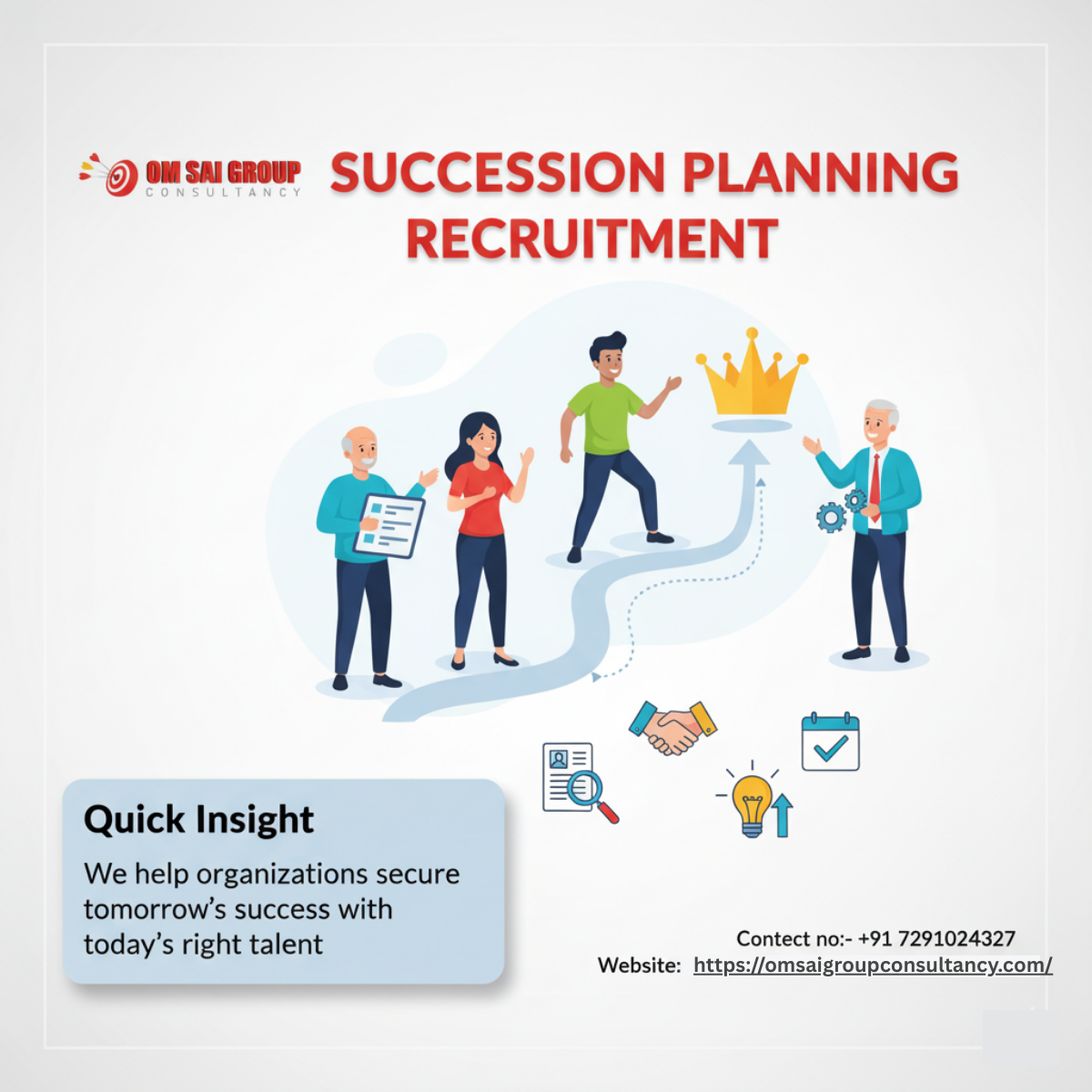
in the corporate shuffle, the words, succession planning recruitment drum up concern. Putting a ton of work into pinpointing successors for key positions, only to find the gaps, misalignment, or zero progress is the corporate world’s “claim your prize” — it’s sad, but it’s a corporate world prize. Less important, but still troubling, is the fact that chaos burns through an amazing amount of time, money, and progress in the corporate world. Think of it as a “hold onto your butt” as in, the process is still important but it’s chaotically bulky and unimproved.
And now for a fusion: planning recruitment succession no longer has to be seen as a laborious task that takes more time than it is worth. It is not a functional advantage.
Understanding the Steps Involved In Recruitment For A Succession Plan
Recruiting for a succession plan needs a more complex approach than simply choosing a successor. It requires deep analysis of skills, potential, and value fit. Companies need to analyze internal capabilities for anticipating external shifts. Assessments, simulations, and feedback loops create the fabric of the function thematically dubbed to ensure audience members can lead effortlessly. It is particularly challenging to industry and environment sustainability, for the faster it moves, the worse the fit is, and the longer it takes, the more stability is sacrificed. Precise, strategic, and insightful organizational foresight can assist in determining fit. Success of this frame requires a shift from reactive to strategic. succession planning recruitment
How AIHR Succession Planning Is Changing Leadership Pipelines
How has advance technology and infrastructure, specifically AIHR succession planning, changed the way a company can ensure a smooth transition in leadership? It has done this by providing a sifting snapshot of candidates whose performance history, skill inventory, and possible projections are most favorable for strategic roles. Apart from determining optimal outcomes, they facilitate planning for the management of potential crisis, which is critical in unplanned changes. There is more confidence and faster decisions in AIHR users, which correlates to better organizational and talent alignment. A company with no AIHR is reactive, and despite the turbulence, it is capable to thrive. succession planning recruitment
How Organizational Security Can Be Improved With Business Succession Planning
All business moves depend on having a business succession plan. Having a plan in place allows the company to function as normal as possible when the founder decides to step down or a key executive decides to retire. Business succession planning also involves grooming prospective leaders, processes on passing on vital information, and planning possible outcomes of succession. If this plan is not followed, a company can deal with a loss of leadership, a lack of knowledge about the company, and a loss of trust from stakeholders. Companies with advanced business succession planning frameworks features, can galvanize confidence in the company’s employees, investors and business partners. succession planning recruitment
Managing office and Planning Business Succession
Managing office and planning business succession is where planning becomes active. Successful companies ensure that the succession plan is not a stand alone, and is integrated with the rest of the company’s talent architecture. High-potential employees, or those with promising careers, benefit from strategic planning, mentoring and moderation. A succession plan that priorities the company’s talent pipelines is a plan that is rapid and low risk. Integration with the business successional plan removes the administrative barriers within the company’s functions and positions human resources within the company as a key driver of competitive advantage. succession planning recruitment
The Importance of Career Succession Planning in HRM
Career Succession Planning is critical whenever there is an organizational goal in human resource management as it combines personal development with organizational needs. This focus comes with planning to provide the employee with value the employee can see in the future from career progression, prospect role, and the subsequent planning. Sequential career succession planning brings engagement, loyalty, and organizational memory. HR managers who work on career succession planning in HRM are considered as planners as they build the frameworks to make sure the competent, confident, and aligned with corporate value leaders of the next generation are prepared. succession planning recruitment
Key Succession Planning Considerations for Every Organization
In any business, when considering succession planning there is a lot to take into account:
Position criticality: What business functions would be adversely impacted by the unavailability of specific job positions?
Skills gap: Whose credentials are future-ready?
Cultural fit: Do the prospective successors carry the organizational culture?
Retention: What practices are present to keep the high-potential employees?
Risk management: What strategy exists for unforeseen exits or retirements?
By tackling the above factors, organizations can mitigate the potential risks, instill assurance, and ensure there is continuity in leadership.
The Mechanics of a Succession Planning Exercise
A succession planning exercise is the culmination of a number of steps which when brought together are actioned in a systematic, orderly, and open manner. While it differs in every organization, on a general note, it includes in succession: succession planning recruitment
Establishing a list of essential roles for the business to ensure its ongoing operations.
Assessing the internal candidate base against the organizational standards of competence and potential.
Preparing high potential employees with specific developmental action plans. succession planning recruitment
Testing how well people are prepared by simulating leadership transitions
Periodical evaluations and updates to ensure alignment with the everchanging business objectives. succession planning recruitment
This exercise, when taken seriously, puts succession planning into practice by turning the plans into steps to be taken.
Anticipating the Future: Succession Planning for Employees Reaching Retirement Age
Given that operating a business without an employee can be really inconvenient, succession planning for retiring employees aims at keeping the operational functions as constant as they can be by passing on the gained knowledge and some key skills to the upcoming leaders and employees. succession planning recruitment Systematic approaches to human resource management such as the consolidation and retention of gained knowledge ever performed, combined with well-defined succession plans, as well as mentorship and leadership development programs, are important. In addition to continuity of business operations on and operational stability, this planning approach enhances the reputation of veteran employees, gives the respect they deserve, and creates a legacy that boosts the business culture and enhances resilience.
Frequently Asked Questions (FAQs)
Q1: Why is succession planning recruitment critical for businesses?
A: It ensures leadership continuity, minimizes disruption, and secures long-term organizational stability.
Q2: How does AIHR succession planning improve decision-making?
A: AIHR tools analyze performance data, predict readiness, and model succession scenarios, reducing guesswork.
Q3: Can talent management and succession planning be integrated?
A: Absolutely. Cohesive integration aligns development, retention, and strategic leadership objectives.
Q4: What are common pitfalls in career succession planning in HRM?
A: Lack of clarity, inconsistent skill evaluation, and ignoring employee aspirations can hinder success. succession planning recruitment
Q5: How do companies handle succession planning for retiring employees?
A: Through knowledge transfer, mentorship, and planned leadership handovers that preserve institutional memory.
Conclusion
Eliminating the chaos of succession planning recruitment is not just an aspiration—it’s achievable with structured processes, technological leverage, and strategic foresight. From comprehensive exercises to career planning frameworks, organizations can safeguard leadership continuity, accelerate development, and future-proof their success. Embracing these principles ensures that succession is no longer a source of anxiety but a well-orchestrated advantage.